Salou. Costa Dorada. 26 May 2026.
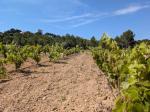
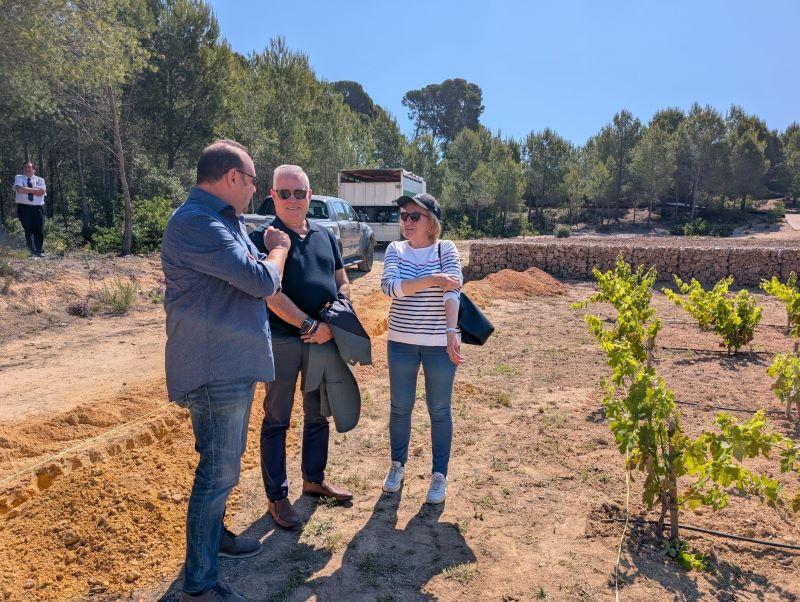
Drawing inspiration from its past, Salou recognized its rich winemaking heritage and decided to revive it. To this end, a project to replant historical grape varieties began two years ago in Pla del Maset. This initiative has now been completed with the planting of 848 additional vines of the native "Pàmpol girat" and "Escanyagossos" varieties.
Specifically, 348 vines of the "Pàmpol girat" grape have been planted—a traditional red variety from Camp de Tarragona that is well-adapted to coastal climates, though it vanished from cultivation in the 1960s. Additionally, 500 vines of the white "Escanyagossos" variety have been planted.
The project is being developed in collaboration with the l’Institut Català de la Vinya i el Vi (INCAVI), la Facultat d’Enologia de la Universitat Rovira i Virgili (URV), and the university's Departament de Bioquímica i Biotecnologia, serving scientific, heritage, and educational goals.
On the scientific front, Francesca Fort, head of the URV's Biochemistry Department, explained that the initiative allows researchers to "observe the resilience of vineyards in sandy soil," a study that could yield valuable insights into adapting to climate change.
Furthermore, for the Salou Town Council, the Pla del Maset project symbolically reclaims the municipality's traditional agrarian landscape and its economic and social history. Consequently, there are plans to open the site to the public, transforming it into a visitable space to showcase the historical significance of viticulture, the local landscape, and the preservation of native grape varieties.
To this end, the Mayor of Salou, Pere Granados, emphasized that the project "connects the people of Salou with their agricultural history and with a landscape that is deeply rooted in our collective identity.