



Salou / News / Salou
The Civic Axis that will transform and unite Salou for people
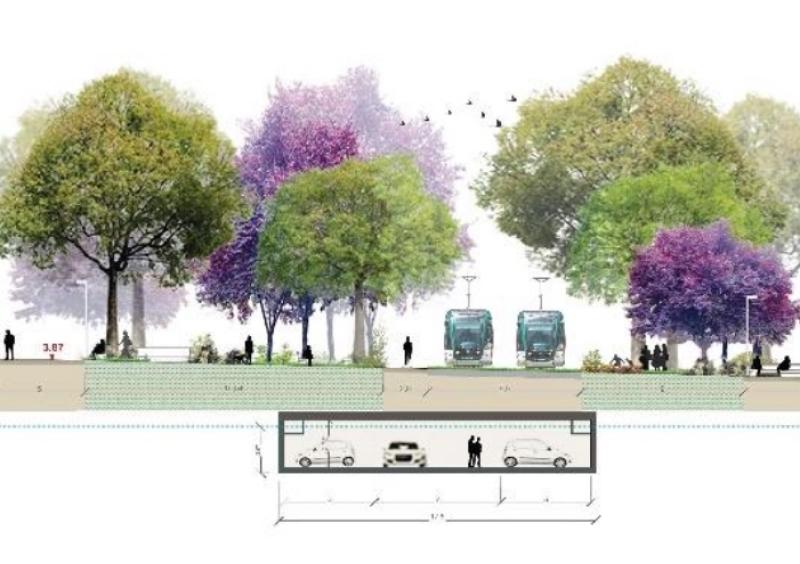
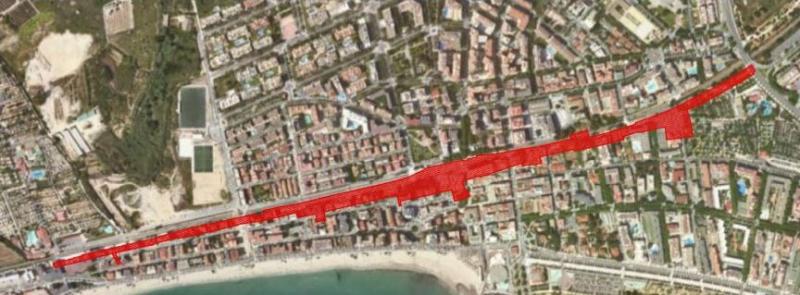
For decades, the railway line divided Salou into two halves, creating a physical and social barrier in the heart of the town. Today, following the removal of the railway tracks, Salou faces the greatest urban transformation opportunity in its recent history: the Civic Axis.
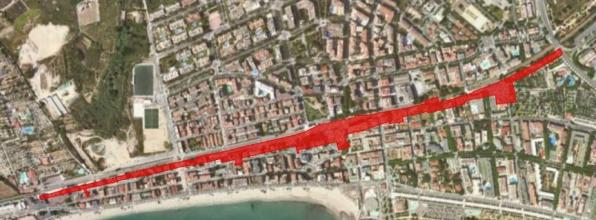
The Civic Axis is an innovative urban redevelopment project for this entire area, aimed at uniting and reconnecting the municipality through an impressive promenade stretching more than 2 kilometres and covering 65,000 m². It will connect the town from the Cambrils boundary to the Reus Highway.
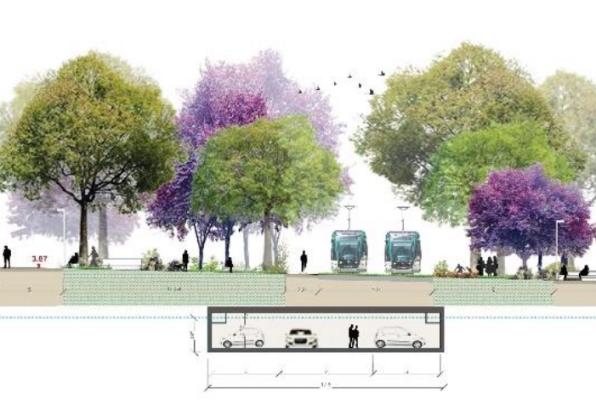
The Civic Axis is intended to create a new centre for mobility, commerce and social interaction, fully integrated with the future Costa Daurada tram system, which will connect Salou with Cambrils and Vila-seca.
THE FOUR MAIN STRATEGIES OF A FUTUR-ORIENTED DESIGN
The design of the new Civic Axis avoids conventional solutions and embraces modern urban planning, designed by and for pedestrians, based on four fundamental principles:
- Reconnecting the urban fabric: the former barrier will become a permeable space. Regular crossings will be created to allow movement across the future tram tracks at street level, eliminating physical barriers and ensuring full accessibility through gentle slopes, ramps and integrated stairways.
- Breaking linearity: to avoid a monotonous and rigid promenade, the project proposes dynamic geometries. A series of diagonal pathways and routes with varying angles will cross the axis, creating vibrant interstitial spaces for landscaped areas and rest zones. Street furniture and lighting columns will be arranged in a staggered layout to provide a more human-scale and welcoming environment.
- Generating new social synergies: adjacent areas that were previously isolated by the railway will be revitalised. The Civic Axis will incorporate children's playgrounds, sports facilities, dog recreation areas and relaxation spaces designed to encourage social interaction.
- A green and sustainable connector: conceived as a true climate refuge, the project will enhance urban biodiversity. Deciduous species (providing shade in summer and sunlight in winter) will be combined with evergreen species. In addition, Sustainable Urban Drainage Systems (SUDS) will be installed, including rain gardens and drainage basins that filter rainwater from pavements and return it directly to the aquifer, reducing pressure on the drainage network.
FIVE AREAS, FIVE URBAN EXPERIENCES
The avenue will vary in width, ranging from 13 metres at its narrowest points to 70 metres at its widest, and has been divided into five main sections adapted to the needs of each area:
- Cambrils Boundary – Barenys: planned as a fluid promenade area, with a linear layout and light-coloured paving to comfortably guide pedestrians towards the town centre.
-Barenys – Torre Vella: a space for leisure and recreation, incorporating children's play areas, pergolas and a catenary-free tram system that maximises visual openness.
- Nova Plaça de Torre Vella: the heart of the Civic Axis and its widest section, reaching up to 70 metres. It is designed with large light-concrete paving slabs, seating areas, pergolas and a large open, flexible space for community events.
- Barcelona Street – Salauris: a mixed-use area combining relaxation zones, play spaces and a design strongly focused on leisurely walking.
- Salauris – Reus Highway: the final section of the promenade, which will eventually connect seamlessly with Parc dels Emprius and Passeig 30 d'Octubre.
SMART AND RESPECTFUL MOBILITY
The new axis will prioritise active mobility above all else. Throughout the entire route, pedestrians and a segregated cycle lane—easily identifiable by its reddish pavement—will coexist alongside the future tram line.
As for motor vehicles, through traffic will be completely prohibited, except for residents and authorised services.
Access routes will be limited to a maximum speed of 10 km/h, with mandatory turning movements at each exit to prevent the area from becoming a traffic shortcut. In addition, beneath the new Torre Vella Square, a future underground public car park with 700 spaces is planned. Its ventilation structures will be discreetly integrated into landscaped areas to minimise visual impact.
PROTECTING UNIQUE HERITAGE AND CREATING NEW FACILITIES
The project will preserve and enhance Salou's historical identity by protecting unique heritage elements already listed in the municipal catalogue, including the historic freight warehouse "Tinglado", the former Carrilet railway station and the characteristic pine grove along Carril Street, among other inventoried features.
In addition, the creation of the Civic Axis will facilitate the development of new municipal facilities and additional housing, particularly affordable and protected housing, helping young families and first-time buyers access the housing market.
In short, the new Civic Axis will not only transform the physical appearance of Salou but will also improve public spaces, making them more welcoming and sustainable. It will serve as a true green connector, enhancing the quality of life of Salou residents.
REQUEST MORE INFORMATION BY EMAIL